

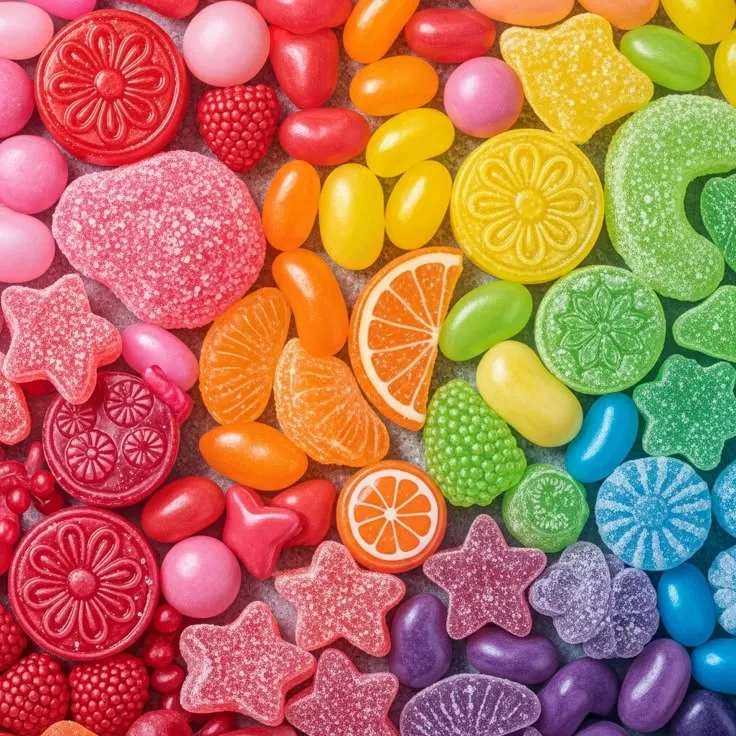
Color plays an important role in confectionery because appearance strongly influences how consumers perceive sweets, gummies, coated products, and other candy formats. Manufacturers using naturally sourced ingredients need to consider more than the desired shade when selecting a coloring ingredient. Heat, acidity, sugar concentration, processing time, storage, and the physical structure of the confectionery can all influence final color performance.
Start With the Candy Format
The formulation needs vary with different confectionery products. Other processing conditions and ingredient systems may be used for hard candies, gummies and jellies, chewing sweets, coatings, fillings and sugar decorations.
Color performance in a gummy may not be the same as it is in a hard candy at higher temperatures. Manufacturers must therefore determine the format of the product, the method of processing the food and the tone that is desired, as well as the intended storage conditions, before choosing a color.
An application-first approach allows comparison of ingredients to be more practical.
Consider Natural Candy Color Sources
Natural Candy Color ingredients may be derived from any of a number of plant-based materials, such as fruit, vegetables, roots, flowers and other botanicals. Red, yellow, orange, blue, purple or other colors can be obtained from different sources.
The selection is based on the appearance desired as well as the environment in which the formulation will be used. Depending on the pH, processing and/or use, some pigments may be more appropriate than others, and some may need special handling or application.
Manufacturers need to consider the source of the color in the entire formulation of the confectionery and not just its natural origin.
Evaluate Heat Exposure
Confectionery processes entail significant heat for many. Natural colors are likely to be exposed to high temperatures during their applications in cooking sugar syrups, concentrating ingredients, depositing candies or applying coatings.
The manufacturers should be aware of the point of color addition and the heat exposure time during production. Adding a color at a different stage of processing can yield a different effect than adding it at a different point in the process.
Representative heating conditions should be simulated in laboratory tests. This will give a better idea of the final color you will get after processing.
Check pH and Sugar Conditions.
The confectionery situation can alter natural color. Formulation factors, such as acidity, sugar content and moisture content, can affect the final shade.
For instance, the acidity and moisture content of gummies and jellies can vary. The different properties can alter the performance of a natural pigment.
It is therefore important for manufacturers to test the colors going into the product directly within the expected recipe. Color monitoring could be beneficial for determining formulation adjustments that may be needed before and after processing.
Compare Candy Food Coloring Formats
The candy food coloring can come in various forms, depending on the application. Caution should be used when handling and incorporating powders, liquids, dispersions and concentrated preparations.
The proper format should result in the proper distribution of the candy without any visible particles or uneven color. Additionally, a manufacturer must determine if the ingredient will be compatible with the product’s moisture, fat, sugar and processing needs.
It is helpful to be guided by the supplier’s specifications with respect to recommended dosage, practical application range, handling instructions, etc.
Assess Storage Stability
It’s possible for confectionery products to sit for long periods of time before being consumed by consumers. Naturally coloured products can change their color over time when exposed to temperature, humidity, light, oxygen and packaging.
Realistic storage conditions should be part of the product trials of manufacturers. For instance, samples can be tested at various times to see if there are any changes in the shade over the course of storage.
Packaging should also be taken into account, as transparent or light-exposed packaging may result in different conditions compared to opaque protection.
Test Color in the Finished Product
Color samples are not a good predictor of the color performance of an ingredient in a finished product. The color needs to be tested at the practical dosages that will be used in the actual recipe.
Manufacturers can evaluate the final shade, color uniformity, processing response, appearance after storage and compatibility with other ingredients of the various candidate ingredients.
These results are more easily known and documented for supplier and ingredient comparisons and provide valuable information to product developers for future production runs.
Consider Supplier Support
Technical guidance is useful during the development of a new naturally coloured confectionery product for the manufacturer. The knowledgeable supplier can give information regarding dosage, format, processing conditions, storage and appropriate applications.
An ingredient should also be reviewed in terms of quality documentation prior to approval for commercial production. Having specifications and trial results next to each other will help to ensure consistency in batches and support future purchases.
Conclusion
Natural colors offer a wide range of hues to confectionery manufacturers, but to choose the right natural color for the right format and manufacturing environment is a challenge. Practical trials should be conducted with regard to the effects of heat, pH, sugar concentration, dosage, storage, packaging and the compatibility of ingredients. If a business is creating naturally colored candy, they can check out FoodRGB.com to find solutions for the ingredients used in their product and discuss their formulation needs with an appropriate technical partner.